Voltar ao ranking
Your Everyday Threat Intelligence
infosecthreatintelthreat-sharingthreat-huntingenrichmentintelligencedfir
Métricas principais
Crescimento de estrelas
Estrelas
2k
Forks
319
Crescimento semanal
—
Issues
38
1k2k
dez. de 2015set. de 2017jun. de 2019mar. de 2021jan. de 2023out. de 2024jul. de 2026
ArtefatosPyPI
pip install yetiREADME
Yeti Platform
Yeti aims to bridge the gap between CTI and DFIR practitioners by providing a Forensics Intelligence platform and pipeline for DFIR teams. It was born out of frustration of having to answer the question "where have I seen this artifact before?" or "how do I search for IOCs related to this threat (or all threats?) in my timeline?"
Documentation links:
- Main website: https://yeti-platform.io/
- Documentation
- Guides

What is Yeti?
In a nutshell, Yeti allows you to:
- Bulk search observables and get a pretty good guess on the nature of the threat, and how to find it on a system.
- Inversely, focus on a threat and quickly list all TTPs, malware, and related DFIR artifacts.
- Let CTI analysts focus on adding intelligence rather than worrying about machine-readable export formats.
- Incorporate your own data sources, analytics, and logic very easily.
This is done by:
- Storing technical and tactical CTI (observables, TTPs, campagins, etc.) from internal or external systems.
- Being a backend for DFIR-related queries: Yara signatures, Sigma rules, DFIQ.
- Providing a web API to automate queries (think incident management platform) and enrichment (think malware sandbox).
- Export the data in user-defined formats so that they can be ingested by third-party applications (SIEM, DFIR platforms).
Some screenshots
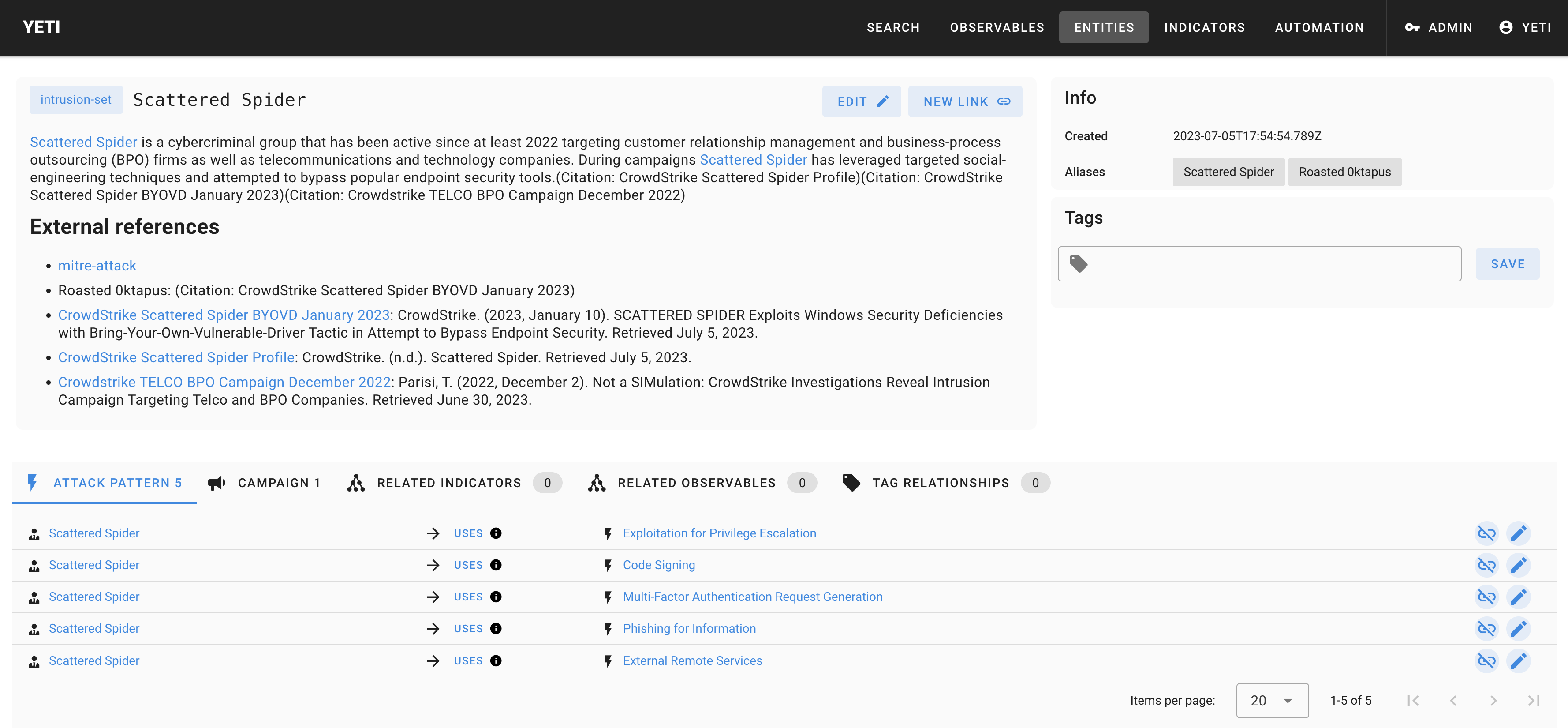
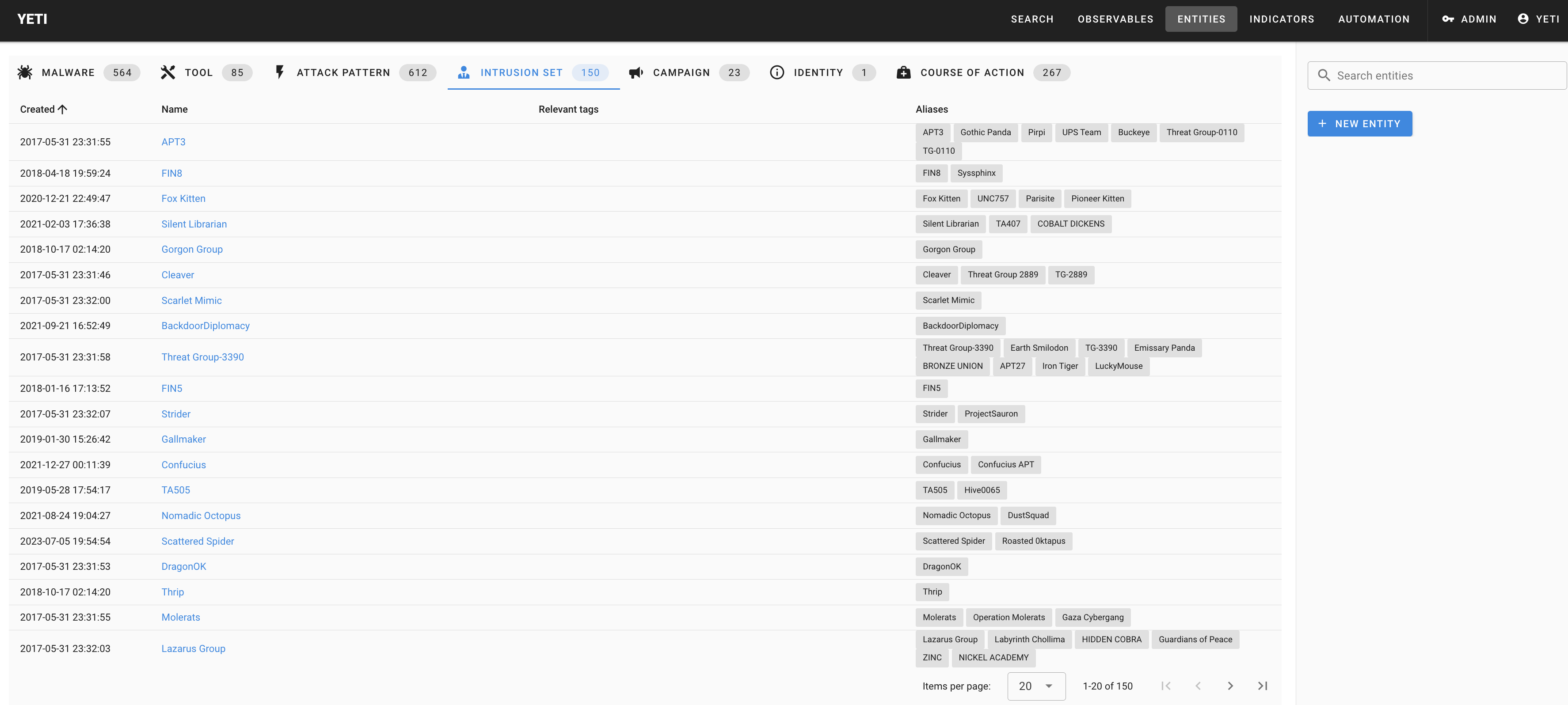
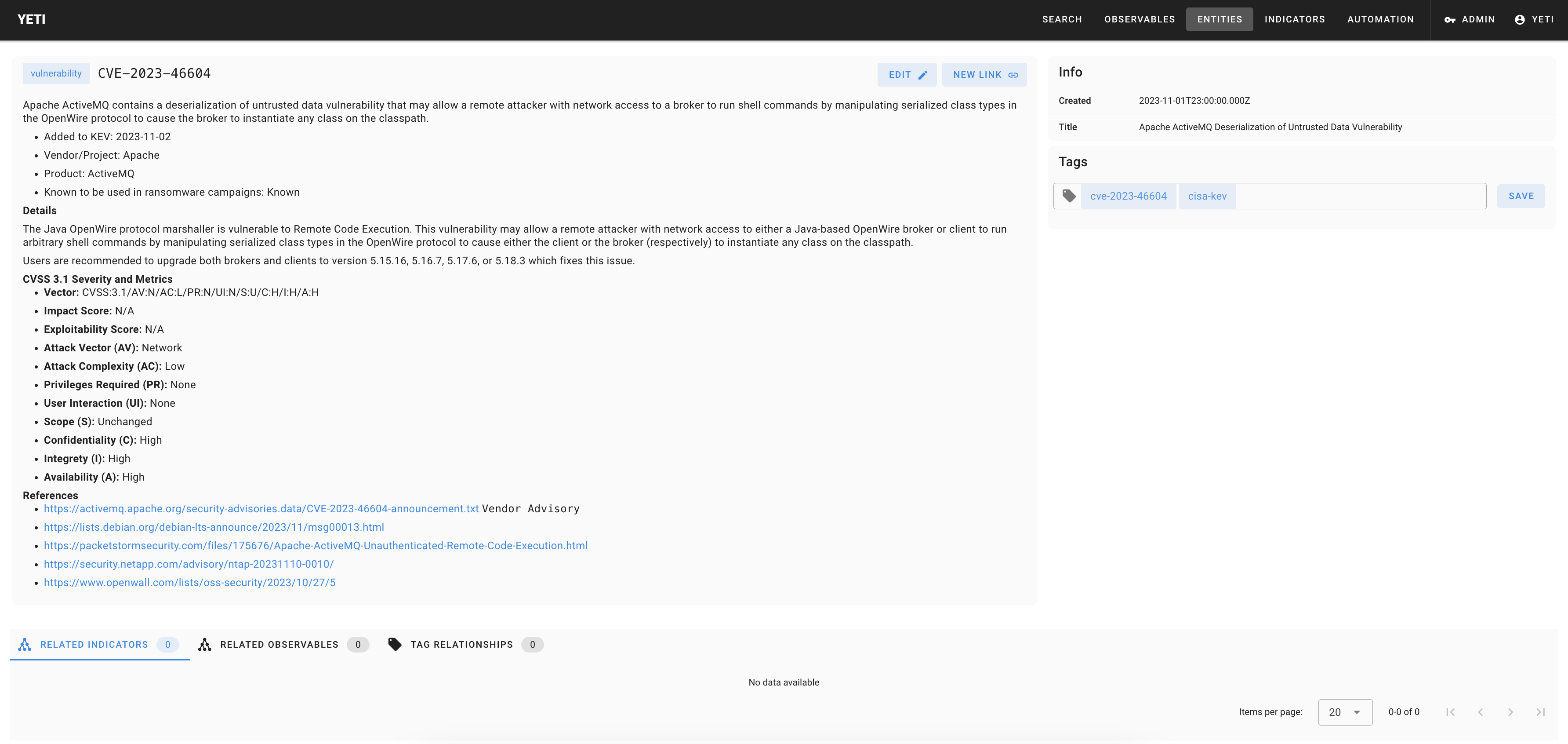
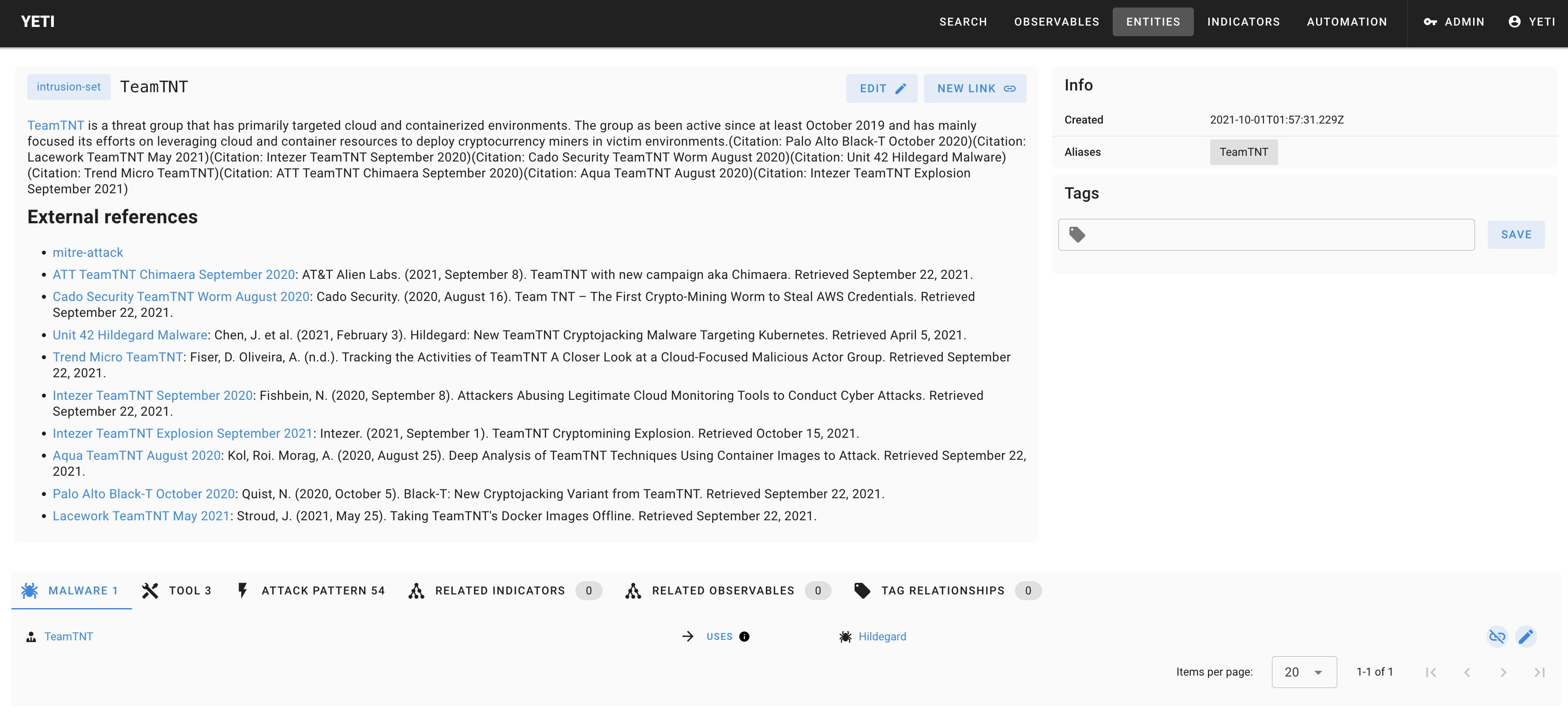
Repositórios relacionados